Thursday, June 9, 2016

Copyright Law


Copyright law reflects an important balance between the rights of 
the creators and the benefits to society. 


  • Research information needs proper citation and reference
  • Downloaded material should be checked for fair use in classroom setting
  • Educating safe ethics to students


Media Literacy

Media Literacy is the ability to access, analyze, evaluate and create media in a variety of forms. Media literate youth and adults are better able to understand the complex messages we receive from television, radio, Internet, newspapers, magazines, books, billboards, video games, music, and all other forms of media.

It is important to learn media in education because technology plays powerful tool for an effective communication. 

"Media literacy deals with the culture and lifestyle of students. They enjoy thinking and talking about what is going on in the media. For teachers, it is an opportunity to have students examine how they are influencing and being influenced by popular culture."


Thursday, May 26, 2016

Web 2.0


Web 2.0 is the current state of online technology as it compares to the early days of the Web, characterized by greater user interactivity and collaboration, more pervasive network connectivity and enhanced communication channels. 
Increasingly, websites enable community-based input, interaction, content-sharing and collaboration. Types of social media sites and applications include forums, microbloggingsocial networkingsocial bookmarkingsocial curation, and wikis
When we mention affordance in technology, it means a method in which technology can support certain things or concepts. We can create a graphic organizer, poster, interactive, presentation and much more to teach, present, and communicate through variety of people. Resources from various educational website can boost academic experience for current and future students. 


However, critics of Web 2.0 maintain that it makes it too easy for the average person to affect online content, which can impact the credibility, ethics and even legality of web content. There are challenges we face, but it's part of process to creating an innovation and web 3.0


Thursday, May 12, 2016

How would you use the concept of flipped classrooms in your teaching?


Not too long ago, many teachers would have been horrified at the thought of their students watching them on YouTube. But in the world of “flipped” classrooms, students watching online videos of their teachers is a key part of their instruction. 

Flipped classrooms have become increasingly popular, and sometimes controversial, within higher education. Many educators have touted the potential benefits of this model and initial research regarding implementation has been primarily positive. The rationale behind the flipped classroom methodology is to increase student engagement with content, increase and improve faculty contact time with students, and enhance learning. 

Knowing the content and carefully preparing materials to present to the students are crucial in order to take advantage of the flipped classroom. If not done right, the whole purpose can be misguided.  
A flipped classroom design is suppose to improve student performance and perceptions of the learning experience.

More INFO
Example
Art Class

Thursday, May 5, 2016

What are some important best practices for technology in education?

It is important to have clear and effective communications with the students. Otherwise, using a technology can be more of a barrier than a tool. CLICK here for some instructions


Thursday, April 28, 2016

What is TPACK?

TPACK stands for Technological Pedagogical Content Knowledge. It is a framework to understand and describe the kinds of knowledge needed by a teacher for effective pedagogical practice in a technology enhanced learning environment.


The TPACK framework for teacher knowledge is described in detail, as a complex interaction among three bodies of knowledge: Content, pedagogy, and technology. The interaction of these bodies of knowledge, both theoretically and in practice, produces the types of flexible knowledge needed to successfully integrate technology use into teaching.
*If you would like 3 minutes video reference on TPACK, please click here  

Content Knowledge –  Teachers’ knowledge about the subject matter to be learned or taught. The content to be covered in middle school science or history is different from the content to be covered in an undergraduate course on art appreciation or a graduate seminar on astrophysics.
Pedagogical Knowledge – Teachers’ deep knowledge about the processes and practices or methods of teaching and learning. They encompass, among other things, overall educational purposes, values, and aims.
Technology Knowledge – Knowledge about certain ways of thinking about, and working with technology, tools and resources. and working with technology can apply to all technology tools and resources.
Pedagogical Content Knowledge  – Consistent with and similar to Shulman’s idea of knowledge of pedagogy that is applicable to the teaching of specific content.
Technological Content Knowledge  – An understanding of the manner in which technology and content influence and constrain one another.
Technological Pedagogical Knowledge  – An understanding of how teaching and learning can change when particular technologies are used in particular ways.
Technological Pedagogical Content Knowledge – Underlying truly meaningful and deeply skilled teaching with technology.

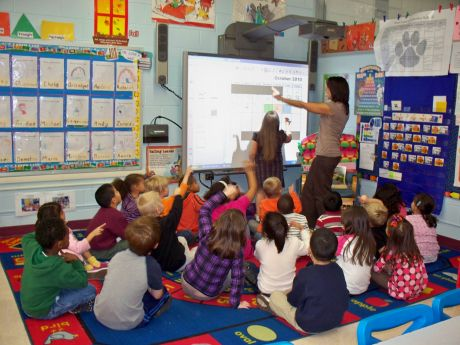
The technologies of tomorrow are already being tested in select classrooms today, promising the brighter future of how students could learn. Technology equipment like Chromebook and smart board have already made headway into education.

Many educators are taking steps to integrate technology into our daily curriculum. It is becoming essential tool to effectively communicate with every individual students.
For more information, click here


Thursday, April 21, 2016

What I hope to get out of this course

I hope to learn various technique where I can incorporate technology in a classroom. I plan to be a classroom teacher for middle school one day and this class is a great opportunity for me to improve my computer skills. I don't know what to expect from this class so far, but it's interesting to learn something different everyday. The current classroom setting is already changing in multitude of ways. Many schools now have smart boards, IPads, and chrome books that replaces text books, chalk board, and old fashioned pen and paper. All standardized tests are held at computer labs with increasing securities. I think it is extremely important for teachers to stay relevant and up to date with current events, and technology is definitely on the top priority. I'm pretty excited to take this course this spring 2016. I hope to learn fun and interactive materials!

Technology and Education